
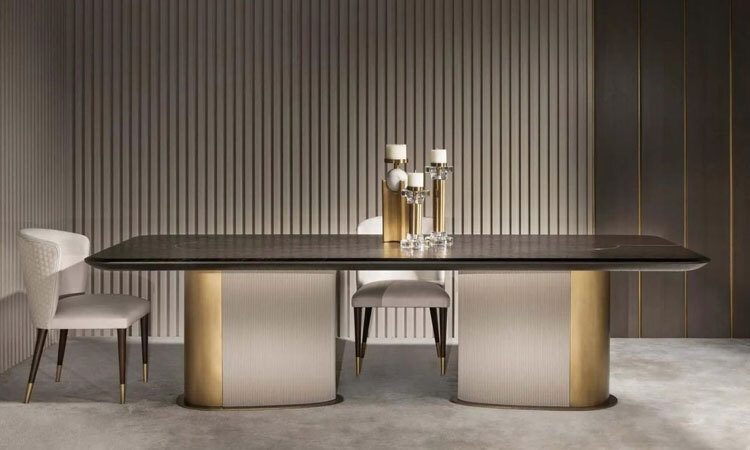
The unquestioned anchor of dining rooms, the 4-legged dining table, is being reimagined by designers. And it is easy to see why. Post-COVID, homes went through a massive change, with many completely doing away with rigid layouts. What emerged were multipurpose spaces that doubled as a chill zone and also a workspace. As such, a standard dining table with four legs started to feel a bit redundant and restrictive in today’s modern homes.
Current dining table design trends in Kolkata and across the country are focusing on the anti-symmetry aesthetic. This is a bold design philosophy that is breaking the traditional rule and prioritizing human-centric ergonomics, along with visual flow.
Continue reading to know exactly why 2026 is doing away with the 4-legged model and embracing dynamic, anti-symmetric dining architecture.
- To Cater to the Rise of Multi-Functional Hybrid Spaces
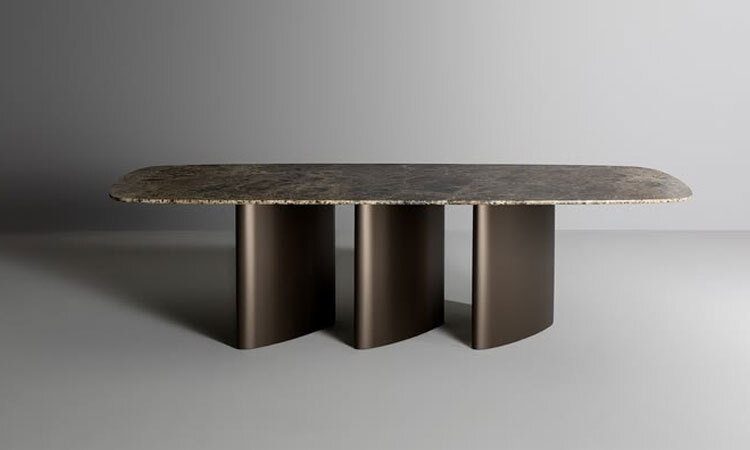
Modern residential floor plans are increasingly open-concept, blending kitchen preparation zones, formal dining areas, and remote workspaces into a single, continuous space.
- The Challenge? Traditional four-legged tables create rigid boundary lines and act as visual blockades within an open floor plan. When placed in the center of a room, the four corner legs interrupt sightlines and make the transition between different functional areas feel jarring and uninviting.
To deal with these difficulties, the antisymmetric and pedestal models utilize an asymmetric arrangement of supporting columns. It enables the table to seamlessly integrate with the rest of the areas while preventing a sharp boundary from forming. As such, the floor space becomes versatile and flexible.
- To Meet the Demand for Flexible and Mixed Seating
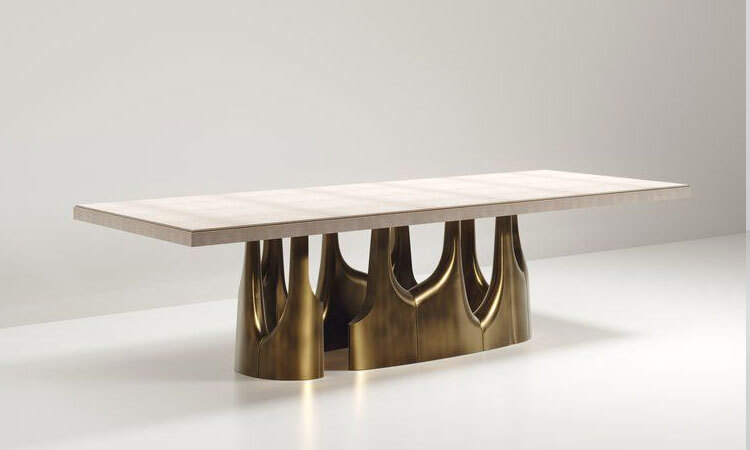
The traditional four-leg rule enforces a strict, predictable seating geometry, requiring matching sets of chairs spaced evenly apart along the perimeter of the structure.
- The Challenge? Corner legs limit how many people can sit comfortably at the table. They also severely restrict the use of dynamic seating options like long benches or curved, modular banquettes that cannot easily slide around or accommodate a corner table leg.
When the corner legs are removed, the whole edge of the table is suddenly open. You now have the opportunity to create a variety of seating combinations. For example, you can place a wood bench on one edge of the table and a pair of convex chairs on the opposite side. This does not create any imbalance and will look aesthetically pleasing.
- To Maximizing Usable Legroom and Comfort
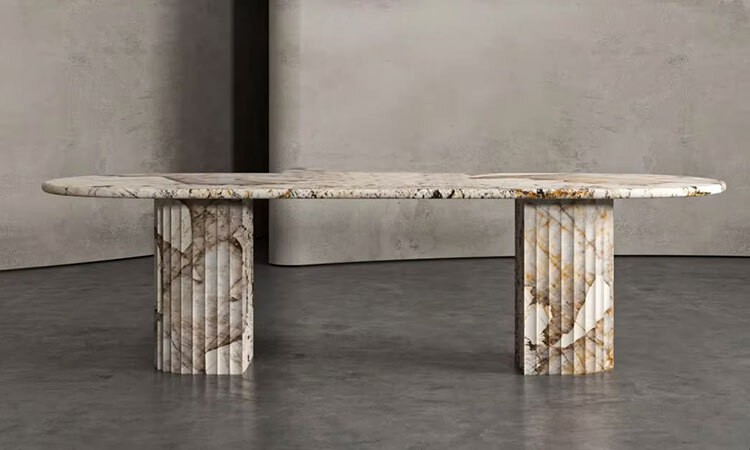
Ergonomics have become a priority in 2026 as dining tables are increasingly utilized for long remote-work sessions, family projects, and extended entertaining.
- The Challenge? Standard tables position legs at the extreme corners, reducing usable legroom, restricting chair placement, and often forcing guests to sit directly behind a heavy wooden post or metal bracket.
The obstruction of corners is fully removed when changing to a central pedestal, V-shape asymmetrical base, or a tripod stand. It ensures that there is enough room for leg movement without contacting any structural support, thereby improving daily comfort.
- To Integrate Tactile, Sculptural Materials
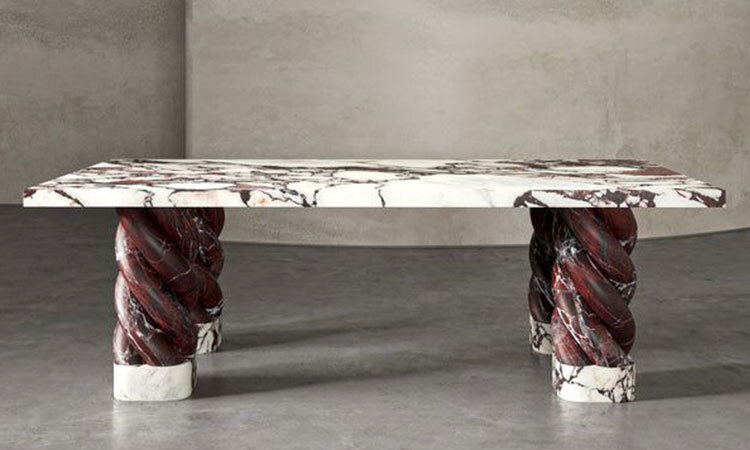
In 2026, high end furniture stores in Kolkata are viewing dining tables as art pieces instead of basic utility furniture meant to blend into the background.
- The Challenge? Conventional four-legged wooden tables with uniform geometric profiles often appear too industrial, plain, or overly traditional in highly curated residential interiors that demand personality.
The use of irregular and asymmetrical bases ensures that designers can feature strong and textured materials like fluted timber, cast metals, and smooth-textured travertine. The base thus stands out visually, transforming a basic eating surface into an object of art that serves as the center of attention in the room.
- To Easily Adapt to Custom and Irregular Floor Plans
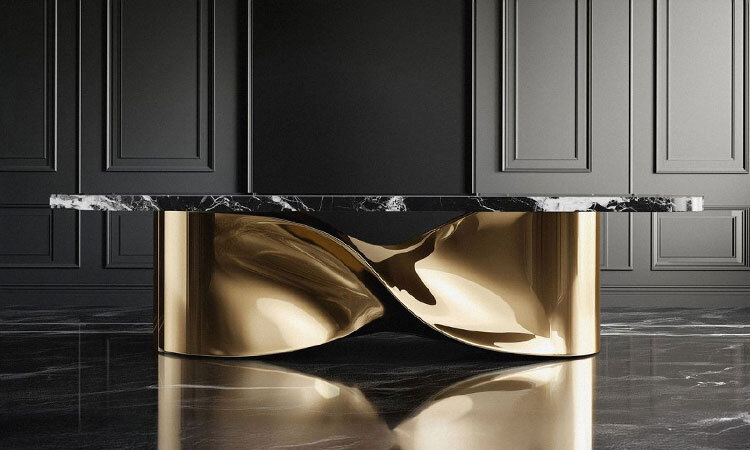
Organic architecture is on the rise, and you will see many homes featuring curved walls, open nooks, or unique, non-rectangular spaces.
- The Challenge? A standard rectangular, four-legged table clashes with the gentle, flowing curves of these newly designed architectural spaces, leaving awkward dead zones around the room.
Anti-symmetry makes it possible for the shape of the table to reflect the architectural surroundings. Tables that have kidney-shaped or teardrop shapes, as well as those that are not centrally located on their pedestal, fit nicely into rounded alcoves.
- To Embrace Imperfection in Curated Design
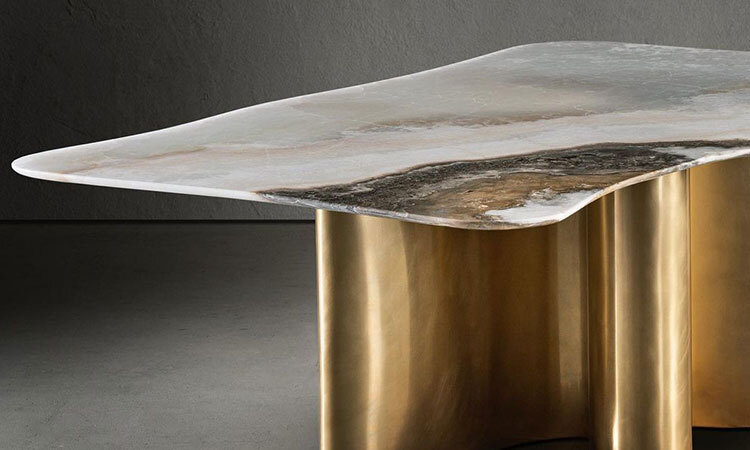
The modern homeowner is moving away from perfectly matching, mass-produced furniture sets in favor of a collected, highly personal look.
- The Challenge? Homogenous, symmetrical design can make a dining room feel cold, sterile, and overly designed, lacking the warmth expected from a modern home.
Asymmetry introduces a sense of human-centric imperfection and visual tension. An asymmetrical base makes the room feel less like a catalog spread and more curated over time, adding a sense of unique personality to the space.
Conclusion
Breaking away from the traditional design of four legs is an attempt to satisfy the demands of contemporary life and create more customized interiors. This anti-symmetrical design ensures the dining room remains a lively space for many years by emphasizing flexible seating arrangements and ample legroom.
What do you think of this trend? Yay or nay? Let us know in the comments.